GEF SGP CSO Challenge Grant 2026
By International Union for Conservation of Nature (IUCN)
Check your eligibility
Sign up and we'll tell you whether your startup qualifies for this grant.
Quick Answer
A global program providing direct grants up to US$300,000 (approximately ₹2.85 crore) to Civil Society Organizations (CSOs) for scaling high-impact environmental solutions.
- Funding amount
- Varies
- Funding type
- Grant
- Application deadline
- Closed
- Location
- International
Results & next round
Applications for this round closed on 15 September 2026. The organiser has not published a selection list that we can verify yet.
Selections for this programme are announced by International Union for Conservation of Nature (IUCN). Official links are listed under Sources below.
We update this page when results are published, and when the next round opens.
About this grant
The GEF Small Grants Program CSO Challenge Program (GEF SGP CSO Challenge Program) is a new global initiative launched by IUCN and the Global Environment Facility (GEF) to identify, reward, support, and scale up high-impact innovative environmental solutions from civil society organizations (CSOs). These organizations operate on the front lines of environmental crises, but their crucial work is often under-funded and under-recognized.
Building on the success of the GEF's long-standing Small Grants Program (SGP), which has provided over $838 million in project funding to nearly 30,000 community-based projects since 1992, the CSO Challenge Program offers larger grants (up to US$300,000) and employs a global, open call for proposals. Beyond financial support, the program offers a tailored suite of programmatic supports, including demand-driven capacity building, technical support, mentoring, and opportunities for knowledge sharing and awareness raising. The initiative aims to enhance the capacity of selected CSOs to design, implement, and scale innovative environmental solutions, foster knowledge creation and partnerships, and promote the inclusion of under-represented groups such as women, youth, and Indigenous Peoples and Local Communities in conservation efforts.
The program specifically seeks to support the replication, adaptation, and scaling of already tested initiatives or work under implementation, rather than basic research or untested pilots. Innovation is broadly defined, encompassing technological, financial, business model, policy, and institutional advancements, as well as engagement with new and underrepresented CSO solution providers.
Eligibility
See if you're eligible
Full eligibility criteria — entity type, stage, sector, founder profile and registration requirements — plus your fit for this program. Sign up to view.
Grant providers
Benefits & Funding
- Fund type
- Grant
What You Get
Selected Civil Society Organizations (CSOs) will receive direct grants of up to US$300,000 (approximately ₹2.85 crore). This financial support is intended to enable the replication, adaptation, and scaling of proven environmental solutions. Beyond funding, the program offers a comprehensive suite of demand-driven supports. This includes extensive technical assistance and mentoring tailored to project needs, capacity building in critical areas like green entrepreneurship, financial management, leadership, policy influencing, and communications. CSOs will also gain significant visibility and networking opportunities to connect, collaborate, and share solutions with other CSOs and policymakers globally through peer-learning platforms, knowledge exchange workshops, and communities of practice.
- Disbursement
- Milestone Based
- Duration
- 24 months
- Cohort size
- 6 startups
Timelines & Process
Selection Process
The selection process is transparent and inclusive, involving multiple stages and a multi-stakeholder Selection Committee chaired by the GEF Secretariat, including representatives from IUCN, GEF partners, civil society, and other relevant groups.
Step 1: Eligibility Check The Lead Executing Agency (RTI International) confirms that each submitted proposal (Concept Note) meets all specified eligibility requirements. Proposals with missing or incorrect information will be disqualified.
Step 2: Technical Review & Shortlisting Eligible Concept Notes undergo a technical review by two assigned reviewers from the Selection Committee, based on thematic scope and CSO type. The highest-scoring 20-25 proposals are then invited to submit a Full Proposal.
Step 3: Full Proposal Evaluation & Final Selection Full Proposals are evaluated by another panel of two reviewers from the Selection Committee. Based on these scores, the Lead Executing Agency selects the top 12 proposals to be presented to the full Selection Committee. The Committee then convenes virtually to discuss the final shortlist and selects six winners. IUCN recuses itself from voting on decisions involving its members to avoid conflicts of interest.
Step 4: Announcement, Refinement & Contract Negotiation Successful applicants are notified and undergo a technical and Environmental and Social Management System (ESMS) refinement process, which may take 1 to 5 months. After mutual agreement on the refined proposal and contractual conditions, winning CSOs sign a grant agreement. Unsuccessful applicants receive written notification and an explanation of the outcome.
Application Process
- 1
Submit Concept Note
Submit your initial concept note through the program website, demonstrating a proven solution and scaling potential.
You - 2
- 3
- 4
- 5
- 6
- 7
- 8
- 9
- 10
How to apply
Four steps from draft to disbursement — one action each.
- 1
Draft your application
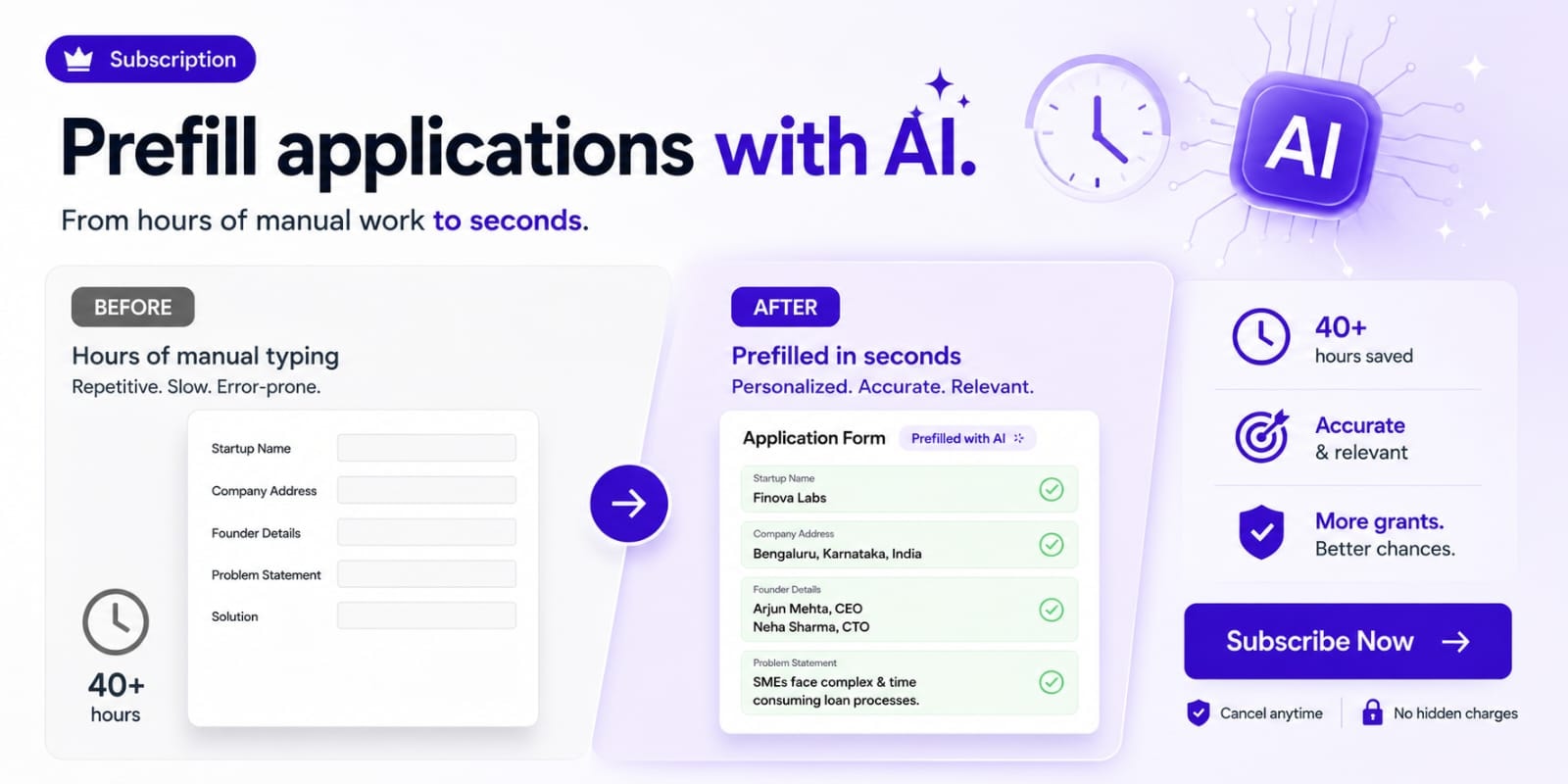
Answer the form inside the grant tracker — AI drafts each response using your past answers, so you're not starting from a blank page.
- 2
Submit on the official portal
Use the official application link and verify all details before final submission.
- 3
Follow up
Reach out 5–7 days after submitting to confirm receipt and ask about the review timeline.
Program templates & documents
Files the program publishes for applicants — download these and apply in the prescribed format.
Frequently Asked Questions
Who can apply for the GEF SGP CSO Challenge Program?
The program is open to Civil Society Organizations (CSOs) with a legal entity and a bank account in the organization's name. Applicants must be based in GEF SGP-eligible recipient countries, and the proposals should focus on scaling or replicating already tested environmental solutions.
What kind of funding and support is provided?
Selected CSOs receive direct grants of up to US$300,000 (approximately ₹2.85 crore). In addition to financial support, the program offers demand-driven capacity building, technical assistance, mentoring, and opportunities for global knowledge sharing and networking among CSOs and policymakers.
What are the key focus areas for project proposals?
Proposals must align with at least one of five SGP 2.0 priority areas: community-based management of threatened ecosystems and species; sustainable agriculture and fisheries; low-carbon energy access; chemicals and waste management; and catalyzing sustainable urban solutions.
What is the application process?
Applicants submit a Concept Note through the program website. Shortlisted applicants will then be invited to develop and submit a Full Proposal. A multi-stakeholder Selection Committee reviews proposals and selects winners. The overall review and award process is expected to take approximately 3 months after the application deadline, with contracts signed by December 2026 and projects starting in early 2027.
Are co-financing commitments required?
Co-funding is not strictly required but is strongly encouraged. Demonstrating existing co-financing commitments or credible pathways to mobilize additional public, private, philanthropic, or community financing can strengthen a proposal by showing potential for further investment and long-term sustainability beyond the grant period.
Sources
Data on this page is compiled from official program and provider references.