IUCN NL Land Acquisition Fund 2026
By IUCN NL
Check your eligibility
Sign up and we'll tell you whether your startup qualifies for this grant.
Quick Answer
Grants of up to €100,000 (about ₹1.09 crore) for local conservation NGOs in Asia, Africa, Latin America and the Pacific to buy or lease threatened natural land. The 2026 call closed on 1 May 2026.
Results & next round
Applications for this round closed on 1 May 2026. The organiser has not published a selection list that we can verify yet.
Selections for this programme are announced by IUCN NL. Official links are listed under Sources below.
We update this page when results are published, and when the next round opens.
About this grant
The IUCN NL Land Acquisition Fund 2026 call is closed. The deadline for pre-proposals was 1 May 2026, and the pages we read do not announce a next call. If you run a conservation NGO in India, treat this page as a guide for preparing ahead, and check the IUCN NL website before you start work. The Land Acquisition Fund (LAF) gives grants of up to €100,000 (about ₹1.09 crore) per project to local groups that buy or long-term lease threatened nature.
What the program offers
LAF grants go up to €100,000 per project, and the fund says organisations are generally awarded one project per call. Co-funding is allowed where the impact of the IUCN NL grant is clearly shown and it makes up a substantial part of the total budget, or where it is expected to bring in money from other donors.
The money mainly pays for land purchase or long-term lease, and for other effective area-based conservation measures. It may also cover first investments that make the purchase last, such as fencing, signage, guards' salaries and accommodation, but these may not exceed 30 percent of the requested budget.
Who can apply
Applicants must be locally registered non-profit organisations, NGOs or civil society organisations in Africa, Asia, Latin America or the Pacific, so Indian conservation NGOs are in scope. The organisation must prepare and run the project itself, hold a bank account in its own name in the place where it is based or where the project is carried out, and have proven experience managing conservation areas, including project management, financial management and financial control.
Private individuals, for-profit companies and government bodies cannot receive grants. Neither can projects or organisations mainly focused on sustainable agriculture, education, or rescue and rehabilitation centres.
High priority goes to land that hosts species listed as Critically Endangered, Endangered or Vulnerable on the IUCN Red List, areas of high biodiversity value such as Key Biodiversity Areas, Important Bird Areas and Alliance for Zero Extinction sites, corridors and stepping-stone habitats, ecosystems under-represented in public protected areas, and significant populations of threatened plants and trees. Local participation, including the role of women, youth and marginalised groups, should be central.
It suits an established Indian NGO with a track record of managing protected land and a specific site it wants to secure. It is not for an individual, a company or an organisation that has never managed a conservation area.
How to apply
The 2026 process started with a pre-proposal of at most four pages, excluding annexes, written in the fund's pre-proposal format in English (preferred) or Spanish. Good maps were a very important selection criterion, and the guidelines said pre-proposals without them are rejected immediately. The pre-proposal had to be sent as a .docx file by email to the fund before the deadline. Applicants were advised to read the guide on privately protected areas, which is available in English, Spanish and Portuguese.
The fund does not use AI in its review and expected applicants to write without AI help; anyone who did use it was asked to say how and why. A practical tip: prepare your site maps and land documents first, because maps decide whether your pre-proposal is read.
How applications are judged and what happens next
IUCN NL screens every pre-proposal with help from a global network of experts. A limited number of applicants are then invited to write a full proposal, which does not guarantee funding. Full proposals are evaluated with international and regional experts, and final decisions for the 2026 call were expected in October 2026. The pages we read do not report the results.
About IUCN NL and the Land Acquisition Fund
IUCN NL is the Dutch national committee of the International Union for Conservation of Nature. Its Land Acquisition Fund was founded in 2001, and the news page says it has enabled the safeguarding of over 64,000 hectares, while the criteria document cites over 320,000 hectares purchased or leased. The fund is supported by a growing number of private donors.
Things to check before you apply
- The 2026 call is closed and no next call date is announced on the pages we read.
- Next time, read the criteria document and pre-proposal format for that call, since details can change between years.
- Indian NGOs receiving money from abroad should check FCRA, FEMA and tax treatment with an adviser before applying.
- You need a bank account in the organisation's own name.
Eligibility
See if you're eligible
Full eligibility criteria — entity type, stage, sector, founder profile and registration requirements — plus your fit for this program. Sign up to view.
Grant providers
Benefits & Funding
- Fund type
- Grant
What You Get
A Land Acquisition Fund grant is up to €100,000 (about ₹1.09 crore) per project, and organisations usually get at most one project per call. The money pays for buying land, leasing it long-term or other area-based conservation measures. Up to 30% of the requested budget can cover set-up costs that keep the land protected, such as fencing, signage, guards' salaries and accommodation. Co-funding from other donors is allowed when the IUCN NL grant is a substantial share or helps attract more money.
- Bootstrap friendly
- Yes
Timelines & Process
Selection Process
IUCN NL screens every pre-proposal with the support of a global network of experts. A limited number of applicants are invited to submit a full proposal, which IUCN NL evaluates with international and regional experts before awarding grants. An invitation to write a full proposal is not a guarantee of funding. Final decisions for the 2026 call were expected in October 2026.
Application Process
- 1
Pre-proposal
Send a 4-page pre-proposal with maps in the LAF format.
You - 2
- 3
- 4
How to apply
Four steps from draft to disbursement — one action each.
- 1
Draft your application
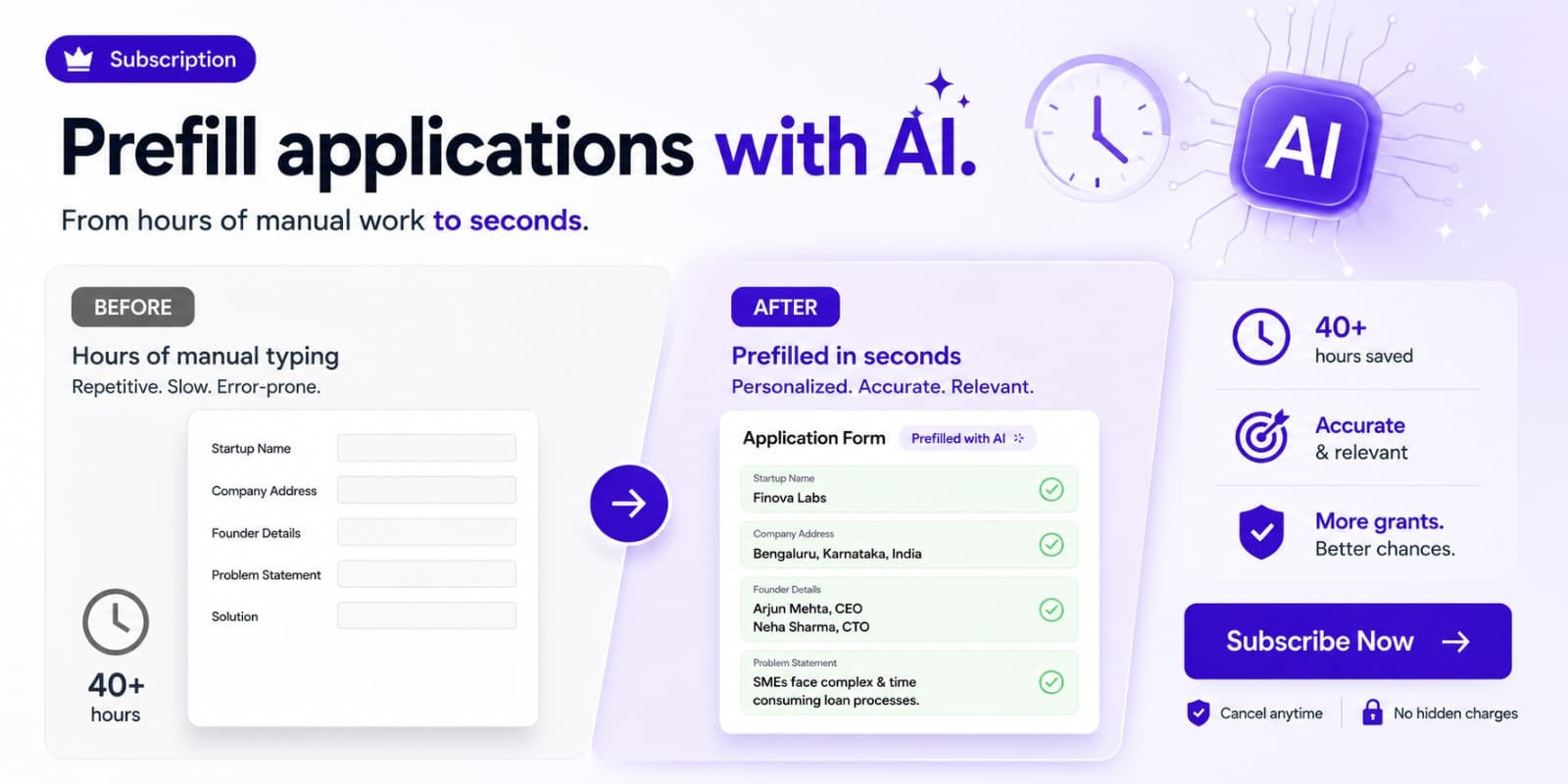
Answer the form inside the grant tracker — AI drafts each response using your past answers, so you're not starting from a blank page.
- 2
Submit on the official portal
Use the official application link and verify all details before final submission.
- 3
Follow up
Reach out 5–7 days after submitting to confirm receipt and ask about the review timeline.
Frequently Asked Questions
Is the IUCN NL Land Acquisition Fund open now?
No. The 2026 call closed on 1 May 2026, and the pages we read do not announce a next call. Check the IUCN NL website before you plan a proposal.
Can an Indian NGO apply to the Land Acquisition Fund?
Yes, if it is a locally registered non-profit, NGO or civil society organisation in Asia with a bank account in its own name and proven experience managing conservation areas. Indian NGOs should also check FCRA and tax rules with an adviser.
How much does the fund give?
Up to €100,000 (about ₹1.09 crore) per project, and organisations are generally awarded one project per call. Co-funding is allowed where the fund's contribution is a substantial part of the budget.
What can the money pay for?
Buying or long-term leasing of threatened land, or other area-based conservation measures. Up to 30 percent of the requested budget can cover first investments such as fencing, signage, guards' salaries and accommodation.
Who cannot apply?
Private individuals, for-profit companies and government bodies cannot apply. Projects or organisations mainly about sustainable agriculture, education, or rescue and rehabilitation centres are also excluded.
Is it a grant or equity?
It is a grant to a non-profit for land protection. The criteria describe grants and do not describe repayment or equity.
What did the 2026 application need?
A pre-proposal of at most four pages in the fund's format, in English or Spanish, sent as a .docx file by email. It needed good maps, and pre-proposals without them were rejected.
What land does the fund prioritise?
Land that hosts Critically Endangered, Endangered or Vulnerable species, Key Biodiversity Areas, Important Bird Areas and Alliance for Zero Extinction sites, wildlife corridors, ecosystems under-represented in protected areas, and threatened plant and tree populations.
Can I use AI to write the proposal?
The fund does not use AI in its review and expects applicants to write without it. If you do use AI, you are asked to say how and why in the proposal.
When were the 2026 results announced?
Final funding decisions for the 2026 call were expected in October 2026. The pages we read do not report the results.
Sources
Data on this page is compiled from official program and provider references.